Showing posts with label smartphones. Show all posts

Friday, May 02, 2014

Xiaomi the money. Is the smartphone profit margin a thing of the past? Where will the money come from now?

(Yes, "Xiaomi" is sort of pronounced "show me" but soon "mi" will do fine.)

It's a bit sad to see the company where I worked for 16 years break apart. The Nokia I knew no longer exists. But there really are no surprises here. Clever companies know when it's time to move on.

All industries are special, sexy, and exciting. Until the day they aren't. Toasters, refrigerators, transistor radios, televisions, VCRs. They all had their day in the sun, but got covered in a thin, dull layer of boring. They became very everyday objects. Key players come, and key players go.

So, how much have the players in the handset industry changed? Completely! As I've pointed out before, not one single top-ten vendor from 20 years ago is still in the global handset business. They haven't just lost market share, they have given up competing in the industry. The big, fat hardware profits dried up so they just got up and moved on. Let someone else fight for the table scraps. That's the smart move so long as you have another watering hole lined up. (I'll say that the chunk of Motorola owned by Lenovo is a different company than the Motorola we knew.)

I remember five years ago when I first came across a top-ten global handset vendor named Xiaomi. Who? Some company few of us had ever heard of (and few knew how to pronounce) suddenly appeared as a top handset maker. I checked out their website. They had a portfolio of handsets a mile wide with features that must have been stuffed into devices with a plunger. There were phones with televisions, radios, touch input. There were sliders and colors galore. So what is Xiaomi up to now. Well, they are becoming a serious global smartphone company with sharp-looking gadgets. They even make bionic bunny rabbits.

But hey, it's getting crowded in here. Check out Huawei, another company name people can't quite pronounce, but matters a ton nonetheless. Huawei's goal this year is to ship 80 million smartphones. That would give them around 8% global share. And Huawei means business with a $300 million global marketing campaign.

So, what happens when Google brings out the advanced $100 smartphone? And Motorola/Lenovo the sub-$50 smartphone? What happens when good phones reach bubblegum-machine pricing?

How can you compete? No, it's not easy beating Mi. (http://www.mi.com/en)

Is handset (hardware) profitability toast? Key players get burnt once an industry is no longer special.

Wednesday, September 11, 2013

Doro Liberto 810. Is Doro now Scandinavia's hottest smartphone brand?

DORO PR >>

Good bye (Sony)Ericsson. Good bye Nokia. These former global smartphone leaders from the Nordics are going East. They're going West. But who's left in the middle? Doro, that who! Who?

Yes, there are still some smartphone players in Scandinavia. There's Finland-based Jolla of course, stirring up a potentially exciting potion in their mobile cauldron. And then there is Doro, a Swedish phone vendor who has been in the handset longer than many players on the market today.

Doro makes no secret of their niche intentions: the vendor is going after the senior market with simplicity. It's back to the basics with Doro devices.

So, here is the lastest Doro product: the Android-based Doro Liberto 810. There are few details on the company's website about the product (no price or intimate specs), but specs might not matter much to its intended audience. It is a touch display phone with a camera and limited screen litter by design.

Doro handsets tend to cost a bit more than mainstream handsets with more features stuffed. Minimalism always comes at a cost.

The Doro Liberto 810 3G Android smartphone: a little less for a little more.


Wednesday, August 14, 2013

It's official. Windows Phone reaches RC Cola status during Q2 2013. Congrats to Microsoft and partners.

From Wikipedia: The rule of three as put forward by Sheth and Sisodia in 2002 and states that in a mature market, there will normally be three major competitors and several others, who only succeed if they are able to operate in a niche market.

KEY MOBILE TRENDS: RC Cola Status, Platforms & ecosystems, Rule of Three.


Coke, Pepsi, RC Cola. Xbox, PlayStation, Wii. GM, Ford, Chrysler (domestic). Gold, silver, bronze. Friends, Romans, Countrymen. The good, the bad, the ugly. Yes, three is the magic number. So now please stop, look and listen. The smartphone market has reached an important milestone this past quarter.

About one month back, in a blog entry I predicted that BlackBerry would soon "Sega-fy" itself: the company would likely abandon the hardware market altogether and concentrate on providing secure enterprise messaging. BlackBerry would become a software and services company like Sega. No more BlackBerry QWERTY devices. And no more BlackBerry OS.

For the past few years I've been writing that Microsoft would establish Windows Phone as the third ecosystem in smartphone platforms and settle to around 5% market share. For Microsoft, there is too much at stake for it to fail. And unfortunately for BlackBerry, Microsoft has too cash flow to fight the tape.

This is not to say that Microsoft and partners have succeeded in their original goals. Microsoft never intended Windows Phone to be the RC Cola of the platform market. The smaller, third player which feeds on the crumbs. But this is how things developing, and Microsoft must learn to live with less.

According to IDC, 79% of smartphone shipped during Q2 2013 were Android-based, followed by iOS which had 13%. Windows Phone took 3.7%, up from 3.1% a year earlier. Windows Phone outgrew the market, giving it some nice forward momentum against BlackBerry, which dropped to under 3%. The smartphone market has matured quickly, and BlackBerry has fallen below the critical mass required to be a vendor worthy of consumers', developers', and operators' consideration.

Windows Phone has reached RC Cola status (the third brand name in the U.S. cola market). This is the real thing now. But decide for yourself: can other smartphone platforms still come up with a formula for success?

Q3 2013 smartphone platform market shares. Source: IDC.


Friday, August 09, 2013

Smartphones: The changing of the guard continues. Panasonic out. China Mobile, Xiaomi in big push.

CHINA MOBILE's $80 & $210 SMARTPHONE. STORY >>

PANASONIC SET TO LEAVE SMARTPHONE BEHIND >>

Xiaomi looks to take low-end share of the Chinese smartphone market >>


KEY MOBILE TRENDS: commoditization, decling ASPs and margins.

Last month, NEC announced it was leaving the smartphone business and possibly the handset business altogether (see my entry: "NEC's Minolta Moment"). NEC was once a top global handset vendor and number one in Japan.

Now, according to sources out of Asia, it appears that NEC's compatriot Panasonic will exit the smartphone business as well. The reason is clear: on-going losses in a increasingly competitive market. It's time to move on. Barriers to entry keep coming down, and so are ASPs and margins. Panasonic's smartphone push was doomed.

In reality, the marketplace won't notice the void. Panasonic's share of the pie was so thin, this is hardly worthy of much reading. However this is another signal of how drastically the handset business has changed during the past decade or so. During the mid- to late-'90s, Panasonic was consistently a top-five global handset vendor, and was a market leader together with NEC in Japan. Expect more big-name brands to sneak out of the hardware business during the coming years.

One of the key trends in the smartphone business is the changing of the guard. The old-time players are leaving, new blood is coming in.

So here is news of a smartphone push from two Chinese players, China Mobile and Xiaomi. I remember Xiaomi well from a report I wrote back in 2007 when I was a Nokia employee, highlighting this growing Chinese player. One Nokia manager got back to me to assure me that top management knew all about Xiaomi and in fact, Nokia's CEO at the time marked the company as a top future handset competitor in the Chinese market. Commoditization was always a key concern, and drove strategic thinking long before most industry followers realized.

The China Mobile news is not unprecedented: operators have been introducing in-house branded handsets for decades. But China Mobile is not just some operator: it's the world's largest by a margin. With 740 million subscribers, if you want to gain real market share in China, you want to work with China Mobile.

China Mobile's two handsets, Android devices based on MediaTek guts, support TD-SCDMA, China's own 3G standard. Many vendors, including Apple, do not have TD-SCDMA models yet.

Note that China will soon have 300 million Android users, which is about the population of the United States. China in becoming Android nation.


China Mobile's first branded smartphones: Androids for $80 and $210

Wednesday, July 17, 2013

NEC's Minolta Moment. NEC Casio to leave the smartphone business. No surprises here.

STORY >>

I've been predicting for a while that many current second-tier handset vendors will pick up and leave the business over the coming years. Last week I wrote about the coming "Minolta Moments" in the smartphone industry: big names leaving the business just like Konica Minolta left the camera business due to shrinking market share and profitability.

And here we go: today NEC announced its departure from the smartphone business, and likely the handset business in general.

With minuscule market share and partnership prospects gone, it was time for NEC to throw in the towel. A solid brand name, great technical pedigree, but only a tiny sliver of global market share.

NEC was once an industry leader. It had one of the first clamshells on the market, was among the first to make camera phones, and always had some of the most interesting device form factors in the pipeline. Back at their peak, in the mid-'90s, NEC mobile was a top-five global player, and a top-three vendor in the United States and APAC, and the dominant vendor in Japan with 30% market share.

Expect more Minolta Moments during the coming quarters in the smartphone business. Device ASPs are coming down along with margins, the importance of innovation is fading, and there will be few winners in this game of follow the leader.

Good bye NEC Casio Mobile Communications. You will be remembered as the leader you once were. Now who's next?

NEC Casio Mobile Communications to fold. Too bad.

Thursday, July 11, 2013

Vision of the future smartphone? Another projector-based form factor.

I've been seeing similar projector-based form factors for a number of years from other university research labs and company visionary slides. These are playful concepts which might complement devices at some point. But I'm just not seeing the light myself with these visions.

From Reuters: "Researchers at the University of Tokyo are developing indoor projection technology that incorporates a sense of touch for interactive devices of the future. The system emits ultrasonic waves to generate pressure a user can feel and could one day render keyboards, smartphones, and even pens obsolete. Ben Gruber has more."


Monday, July 08, 2013

Will the smartphone industry soon have its own "Minolta Moment." Expect some major smartphone vendors to leave the business over the coming years as profits fade. This won't be a pretty picture.

January 19, 2006: "Konica Minolta quits photo market. Konica Minolta said the market had become too competitive, and added it would sell its digital camera business to Japanese electronics giant Sony..." Source: BBC


Back at the beginning of 2006, despite a fantastically photogenic pedigree, Konica Minolta picked up and walked away from the camera business. Even with two strong brand names, both synonymous with photography, the company sank in an evolving industry until their market share was less than 3%. As competition increased and profit margins faded, the board of Konica Minolta made what must have been a very emotional decision: it's time to leave for greener pastures. Today Konica Minolta competes in the market for office copiers and printers. Photography is only part of the company's history now.

Industry shakeouts are nothing unprecedented in consumer electronics. Radios, televisions, telephones, computers. As average selling prices decline over time, the creamy profitable layer of the industry disappears, and the market self-corrects.

So now it's time to wonder which major smartphone vendor will be the first to surprise the industry with a "Minolta move" to an adjacent industry. Will it be Nokia, BlackBerry, Motorola, HTC, LG? This is conjecture, yes. But when market shares slip to the very low single digits, and only the absolute top-tier vendors are making a profit, we can be sure that some major market adjustments are afoot. It should be noted that many segments of the consumer electronics industry have historically followed a first-in-first-out pattern, with the early industry innovators vacating, leaving more room for the fast followers. (When's the last time you saw a Motorola car stereo?)

Several top-ten handset vendors from the '90s have left the business including Ericsson, Siemens, and a number of significant Japanese manufacturers. In the coming few years, there will be a similar pattern among smartphone vendors. Some brand names which are essentially synonymous with street talk will pick up and walk away. The enablers for extreme smartphone commoditization have quickly fallen into place: the hardware, the software, the distribution. The shakeout is going to happen. This will be an interesting development.


Minolta management, Jan 19th, 2006: "In such a changing world, profits for camera and photo businesses worsened in recent years, and it became necessary to drastically reform business structure for the further growth of Konica Minolta. Ever since we decided and announced restructuring guidelines of our businesses on November 4, 2005, we have been considering practical and detailed plan, and we would like to announce our decision made today as follows: we have decided to withdraw from camera business, such as film cameras and digital cameras..."

Wednesday, June 12, 2013

Will the Fox-Fox partnership disrupt? Mozilla+Foxconn could change the market, but partnership success is spotty at best.

PRESS RELEASE >>
NEWS >>

Mozilla Firefox OS pages >>

KEY MOBILE TRENDS: HTML5, commoditization, Foxconn.

Last week manufacturing powerhouse Foxconn confirmed plans to support Mozilla's Firefox OS with a series of white-labeled devices. If the announced intentions are followed through, this has the potential to impact the handset market in several ways, disrupting both the feature phone and smartphone players.

To begin with, Firefox OS could establish HTML5 as a legitimate mobile ecosystem alternative and slowly dilute native development environments from the bottom up. This won't be easy given the entrenchment that iOS and Android now enjoy. And new ecosystems are notoriously difficult to get going. But HTML5 has the power of the next web behind it, and Apple and Google are largest contributors to the standardization work.

The initial impact of Firefox OS would be felt in developing markets in South America and Eastern Europe, where Mozilla execs believe the platform has the best chances of growing a user base. Firefox OS-based devices are expected to reach significantly lower price points compared to current smartphones on the market. Retail prices of Firefox OS devices should come in below $100, and possibly sub $50 as some point given the smaller hardware profile.

At such low price points, feature phone vendors will need prepare for a consumer expectation shift. If Firefox OS is designed with the future in mind, most current feature phone platforms are descendants of 20th century technology. Vendors such as Samsung and Nokia will need to evaluate Firefox OS. Already Alcatel TCL, ZTE, LG, Huawei, and Sony have announced some interest in the platform. Dismissing Firefox OS could be like snubbing Android in its early days.

But now the Foxconn partnership should be a wake-up call to the industry. While Foxconn will not be selling their own labeled devices, their support should lower the barriers to entry for all vendors great and small to bring Firefox OS devices to market with a rather immediate effect on the feature phone market and lower-end smartphone segment. A trickle-up could put more pressure on smartphone vendors' mid-price ranges and hit ASPs and margins across the industry.


However, it should be made clear that historically, such mega mobile partnerships have a very mixed track record of success. I think back to 1999 when Nokia and Palm, two of the biggest industry names at the time, announced a partnership to create the mobile platform of the future. But despite lots of travel between California and Helsinki, there was nothing to show for the initial market excitement beyond an a press release. And Mozilla's is not the only new platform looking to establish itself. Fresh open-source mobile operating systems from Ubuntu, Intel (Tizen), and Jolla, among others, are appearing on the market.

Nonetheless, history is always on the side of change. Mozilla has shaken up the market before and chipped its way forward against Microsoft's Internet Explorer. History could repeat itself.


Friday, April 26, 2013

Dual-SIM Samsung Galaxy S 4. The trend now is dual-SIM flagships.

KEY MOBILE TREND: dual-SIM.
EVENT HORIZON: immediate.


via Android Beat >>

PRODUCT PAGES >>


This isn't another entry about the dual-SIM smartphone trend; this is another entry about the dual-SIM flagship smartphone trend. A big difference.

No mainstream vendor has been on top of the dual-SIM trend like Samsung. Here's the dual-SIM Galaxy S 4 for the Chinese market. When one just isn't enough.


Thursday, April 11, 2013

Will it trend? 5 is like so 5 minutes ago. Will ~6-inch smartphones trend with consumers?

KEY MOBILE TRENDS: big smartphones/small tablets, form factors
EVENT HORIZON: Immediate.


via The VERGE
SAMSUNG PRODUCT PAGES >>

A smartphone with a 5.8-inch and 6.3-inch display. Why not? This isn't amazing news per se, as this Samsung device has been widely leaking and it's really just another phablet as we've seeing. And even though these are bigger than Samsung's 5.5-inch Note, Samsung is calling these "smartphones."

Other than the size of the screen, the specs are not amazing: no LTE, 1.4GHz Dual Core, 720p, ...

The big question is: now that 5-inch displays are established as the flagship norm, is it already time to bring out the really big guns? It's in the hands of the consumers now.


SAMSUNG: SEOUL, Korea, April 11, 2013 - Samsung Electronics Co., Ltd, a global leader in digital media and digital convergence technologies, today announced the Samsung GALAXY Mega, a device that combines the portability and convenience of a smartphone with the power, multitasking capabilities and extensive viewing experience of a tablet. The newest addition to the GALAXY family balances an optimal viewing experience on a 6.3-inch HD screen, yet is ultra-thin and portable enough to put into a pocket or hold in one hand. The GALAXY Mega offers a mix of popular smartphone and tablet features such as an effortless user experience, a split screen, multitasking between video and other apps and more...

The Samsung Galaxy Mega smartphone with 5.8-inch display. (Needs something to scale it.)


Wednesday, April 03, 2013

One with two? A flagship dual-SIM? Might HTC put two SIM slots into a Chinese version of the One?

ANDROID BEAT STORY >>

KEY MOBILE TREND: dual-SIM smartphones

More than 50 countries have mobile penetration rates greater than 100%. Yes,there are many tariff arbitragers in markets across the globe.

Dual-SIM feature phones are old hat, agreed. And dual-SIM Android smartphones have been around for a few years, but mostly at the low end. But if this HTC leak is legit and not counterfeit, might we see more dual-SIM smartphones at the high-end?

Here's something that might be a dual-SIM HTC One for the Chinese market supporting WCDMA and GSM, but no 4G of any type. There do appear to be two micro-SIM slots. Given the fact that the features are so different from HTC's One as it was recently introduced, this may be something quite different.

Most major and many minor Android vendors have introduced dual-SIM smartphones at this point. I lack the stats to report how well any of those are selling, but I do remember that some Samsung "duos" feature phone models did sell very well in some Eastern European countries a number of years back. All vendors should monitor the potential.

(Nokia does have dual-SIM Series 40 phones, which is considered nearly a smartphone platform. Will we see a Windows Phone dual-SIM device soon or a BlackBerry dual SIMer? Apple seems very unlikely.)

HTC One with two?

Wednesday, March 27, 2013

Predictive intelligent personal assistants are all the rage. Windows Phone, you need something like this Now.

Google's Now, Apple's Siri, Samsung's S Voice. Next: Grokr, Mailbox, Tempo, Sherpa and more. Predictive personal intelligent digital assistants seem to be all the rage. Is this a big app gap for Windows Phone?

UPDATE: Someone informed me (thanks AC) of the availability of a voice-input digital assistant app called Maluuba which is available for Windows Phone 8.

MIT Tech Review Story >>

Sherpa Pages >>

Tempo Pages >>

KEY MOBILE TRENDS: digital/virtual assistants, predictive services, location-based services

Predictive services aren't cutting edge per se. Amazon, for example, is kind enough to remind us, usually with great accuracy, what we want to buy and for whom and when. Many connected navigation devices & services know enough to automatically re-route us when there is trouble ahead. And TiVo uses some smart algorithms to do some smart guessing when it comes to pre-choosing TV content. Even home thermostats are getting in on the act.

But now, smartphones are getting ahead of the game with more advanced predictive applications using clever data-mining techniques which cross on-device info with cloud-based data. Newer applications like Tempo and Sherpa are actively promoting themselves as "predictive intelligent" services with the intent of being proactive "to keep you one step ahead." Have a flight scheduled in your calendar or e-mail? Apps will check if it is leaving on-time, check the weather, and the volume of traffic on the way to the airport. It could offer to dial the number of anyone who you might be meeting at your destination in case of delays, and even reserve a table.

In many ways I see this as more of a UI evolution toward natural user interfaces with a touch of machine-to-machine services thrown in. Of course there are very natural input methods like voice in Apple's Siri and open-text input like Google's "quick add." But the ability of some of these newer, more advanced applications to work with semantics and break information out of silos could raise users' expectations going forward. Data, services, apps, and connectivity are being folded much deeper into the device's user interface. This isn't just location-based voice search. This has the potential to be pretty smooth.

Oddly enough, the platform vendor which gave the world one of the best known smart agents ever, Clippy, appears to be quite absent in this space. To the best of my knowledge, there's nothing quite like Tempo for Microsoft's Windows Phone. To be fair, Nokia does have some great contextual-based services for Windows Phone and there are a few other interesting innovative proactive-like apps for the platform (update: like Maluuba). In addition, I must confess that I haven't seen any usage statistics for any of this: it could be there won't be much demand. The consumer is always the greatest unknown variable in business-model equations.

Nonetheless, I wouldn't take the risk of leaving this gap. I would say that Windows Phone should check its calendar: the platform needs something like this soon if it wants to keep up with a potential experience shift. Be proactive with proactivity.

[Update: another term I was kindly informed of by AC is "virtual assistant."]

Tempo:


Sherpa:


Google Now:


Maluuba for Android and Windows Phone 8:

Friday, March 22, 2013

And the key mobile trend of week 12-2013 is...

commoditization.

KEY MOBILE TREND: commoditization, MediaTek

Sorry smartphone industry, you are not going to escape the fate of just about very other segment of the consumer electronics biz.

Relying on the value of the brand? That will certainly buy you some time. But when all devices look and act alike, pricing power fades, margins thin out, and market shares shift. Just look at the leading U.S. television set maker, Vizio. Who? That's my point exactly.

Some recent stories for your consideration:
- Eric Schmidt: the $70 smartphone is almost here >>
- BLU Products quad-core, dual-SIM Androd for $229, plus other low-costers >>
- MediaTek to see revenues rally 50% sequentially in March (sorry, no free link, but believe it).
- Neo's N003 is “world’s cheapest 1080p 5-inch smartphone” unlocked at $145 >>
- MIT Tech Review: “Apple and Samsung, beware. Practically anyone can make a smartphone these days.” >>

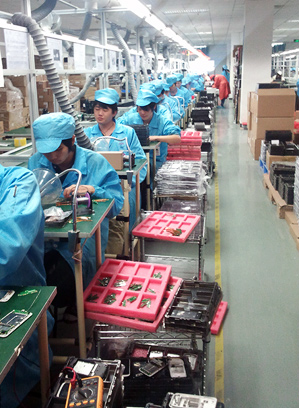
Yes, some guys you have never heard of are selling millions of smartphone enabled by IKEA-like chipset solutions that are assembled in optimized Chinese factories using off-the-shelf software. For years I was concerned about what I called the “supermarket brands,” that is, operator-labeled devices using white-box solutions. There were certainly some big hit devices with Vodafone and T-Mobile labels, more so in developing markets, but consumers did tend to migrate toward big brand names.

But when your neighbor, Frank, can start selling Android-based “Frank-o-phones” on Amazon.com, you had better find some more WOW to stuff into your devices. And some more adjacent business opportunity. For feature phone vendors, this is a trend which can really smart. Get ready to get down (in price).

What to do? Don't worry, I have solutions.

From MIT Tech Review Article:
“Cheap phones: Workers assemble $65 smartphones at Guo Wei Global Electronics, one of hundreds of small Chinese factories now building mobile computers.”


Monday, March 18, 2013

BLU Ocean Strategy. Miami-based BLU Products finds a low-cost, dual-SIM smartphone niche in Latin America.

( With Chinese-made products of course. )


ENGADGET STORY >>

COMPANY SITE | http://www.bluproducts.com/

Related articles:
Here’s Where They Make China’s Cheap Android Smartphones. Apple & Samsung, beware >>

MediaTek to see revenues rally 50% sequentially in March >>


KEY MOBILE TRENDS: commoditization, MediaTek, China

There are many smartphone vendors around the globe that I have never heard of. Most of them are based in China or India or other Asian markets. Here is one that is not. BLU Products. BLU who?

I don't think I had heard of BLU until earlier this month. According to the company's website, BLU was founded in 2009 "by Latin American entrepreneurs" and is headquartered in Miami. "More than one million BLU mobile devices have been sold in 25 countries throughout Latin America, the Caribbean and the U.S." These are not huge volumes for the handset market, but BLU seems to have found a niche.

BLU sells both feature phones and Android-based smartphones, all of which are certainly imported from a Chinese manufacturer. The newsworthy point here is the relatively low prices of their recently announced devices. One Android phone, called "LIFE Play," will sell for $229 on Amazon and other sites. Life Play is 7.9mm thin, has a 4.7-inch HD (720p?) screen, an 8 megapixel camera with 1080p recording, a 2 megapixel front-facing camera, a microSD expansion slot, and support GSM and HSPA networks. And apparently it's dual SIM. There's no LTE support, but this might not have much consequence in some target markets. This smartphone and other Android handsets recently announced by BLU are based on top of a MediaTek quad-core chipset.

Last week we saw a 5-inch, 1080p smartphone from a Chinese called Neo for around $145 in China. It's clear where things are headed.

BLU Products "LIFE Play," a dual-SIM, 4.7-inch Android smartphone for $229:


Samsung Galaxy S 5+ conjecture. What features might the next few generations of flagship smartphones have? Progress has been very linear.

One, two, four, more. Can I have another core? Yes, faster, thinner, brighter, lighter: the smartphone's evolution has been straight as an arrow. But has all the low-lying fruit been picked when it comes to smartphone hardware?

So, what is arguably the smartphone industry's newest flagship product has been announced, the Samsung Galaxy S 4. Now it's time to wonder what's next. What hardware features might the Samsung Galaxy S 5 have? And how about its 2014 contemporaries? Bendable or transparent 3D displays? Floating holograms? Fingerprint readers or brain readers? Dual screen? Powerful built-in projectors? Infi-pixel cameras? Software-defined radio. Nanotech-enabled batteries. Massively multi-core processing...

Given the fact that hardware features tend to expand in a rather predictable fashion, there are rarely any surprises. However, there are opportunities for smartphone vendors to stand out in the crowd for a short time at least. Taking a look at some component and product announcements over the past few years points to some of these possibilities. Here are some things smartphone vendors might be working on implementing behind the curtains:

— Cameras and lenses: Whatever happened to optical zoom in handsets? Nokia and Samsung introduced phones last decade with optical zoom. Then fade to black. But get ready for a zoom comeback: Huawei, LG, and others, are expected to get back into the fold. Perhaps we'll see folded optics lenses in smartphones in the next generation of flagships for lots of great video clips of Rover and the kids.

— Storage: room to grow. I've been hearing about the terabyte phone for more than five years. Yes, a terabyte or more of on-board storage memory. The platforms have to support it, but it's coming. Why? For content creation and consumption, there will be a reason, for example, to store lots of great video clips of Rover and the kids

— Haptics: I've never felt the need for tactile feedback, but that's me. I've learned to never judge the market based on "I." There are some interesting improved haptic APIs coming for more realistic gaming and new types of interfaces and communications. Reach out and touch someone, for real.

— Biometrics: Only a few smartphones have fingerprint readers. A few feature facial recognition. More biometric-based recognition is coming using fingers and eyes, voice and looks.

— Resolutions: 1080p is it for the time being. A move to ultra high definition would make little sense in a pocketable device. The law of diminishing returns has been reached.

— Screens sizes: a matter of consumer taste. Screens might grow a fraction of an inch, but soon after that they enter the tablet market. Then again, it could be that the tablet becomes the new smartphone.

— Tougher phones: Gorilla Glass aside, handsets are still too fragile. Drop your keys, you simply pick them up. Drop your phone, you scoop up the pieces and hope it powers up again. Nonetheless, expect smartphones to become only marginally tougher with such improvements as water-resistant coatings. Handset makers are likely looking at impressive new materials such as graphene, but wide implementation is still some years off. Anyway, it seems that consumers in developed markets never paid too much attention to toughness given the fact that purchase upgrade cycles are around two years and significantly less in some countries. A cracked phone only accelerates the inevitable. And third-party accessories have been covering this area quite well.

— Connectivity: 5G is still a long, long way off. The 2G/3G/4G/WiFi world phone will be the standard at the high-end with LTE at around 100mps. Network providers will continue to work on the other side of the equation with WiFi becoming a more important operator element.

— Battery: There are battery breakthroughs coming according to scientific papers, but for now, it looks like lithium-ion will continue to be the norm. You can read up on some interesting demos using, for example, nanotech-based materials for batteries.

— Processors: Quad core and more. Samsung's clever 4x4 technology could set the standard for power-efficient smartphones, coaxing more use out of the given juice. More powerful mobile graphics processors will give living-room game consoles a run for their money.

— Speakers: There are some interesting surround-sound Bluetooth speaker accessories around. More of this technology will find its way into smartphones.

— Form factors: The world will remain flat. Unfortunately there's little chance of bendable, foldable, stretchable, transparent devices coming to market anytime soon. The component videos we've seen of flexible displays are neat, but until everything else in the device can flex as well, this song remains the same.

— User interfaces: Non-touch input features are making for more natural user interfaces. PrimeSense, the company behind the Kinect, recently introduced their technology for mobile devices to support 3D gesture input. Leap Motion and competitors could make 3D gesture input a norm. In addition, sensors will continue to be used in clever and contextual ways. Get ready for more non-touch.

— The software & services experience: Expect more of following: HTML5, WebRTC, smoother cloud storage, sensor friendly apps, really useful NFC-based services, home integration, laptop replacement

— Modular: The number of sensor-filled accessories will expand enabling a customized experience for the user. This could be the killer trend over the coming two years.

— Price: Flagship devices are expensive, but in a historical context, are absolute bargains. Top phones will continue to retail in the $700 range (unsubsidized), making a difficult entry point for many consumers around the world. Yet the good news is, the trickle-down effect will put the power of what would once have been considered a supercomputer into the hands of millions of first time smartphone owners, connecting them to the internet and opportunity.


The bottom line is, the arrow still points up. There's still a lot to think forward to.

Samsung Galaxy flagship screen sizes from March 2010 to March 2013.
Marching uphill in a straight line makes predictions rather easy:


For those looking to network with Chinese mobile players and understand the market: the kind producers of the Global Mobile Internet Conference 2013 and the extended "G-Trip" contacted me to share a 25% discount code with any readers who might wish to attend. You can register your attendance at http://beijing.thegmic.com/register/ and paste in the following code into the "discount code" section: GMIC-VQ9596MT

GWIC 2013. Be there. And see see Tiananmen Square.


Wednesday, March 13, 2013

Neo's N003 is “world’s cheapest 1080p 5-inch smartphone” retailing at 899 yuan/€112/$145

via UNWIRED VIEW >>

KEY TRENDS: commoditization, 1080p, 5-inch screens

Smartphones keep reaching new lows.

I have friends in Europe who bought unlocked, unsubsidized smartphones in the €80 range with tax. Small screens, little memory, child-like cameras, but brand names. The low-end of the smartphone market is coming down and absorbing feature phone market share.

And the market will keep shifting down. Here is a smartphone from Chinese maker Neo which is being called the “world’s cheapest 1080p smartphone." The Neo N003 has a 5-inch, 1080p display running Android on a quad-core processor and is expected to retail at 899 yuan (€112/$145).

This is a Chinese device for the Chinese market, but devices like this will have trickle down effects across many markets.

PIC/STORY via UNWIRED VIEW


After eights. iOS, Android, Windows Phone after 8 full quarters of sales. Is 3 a magic number for Microsoft?

At the beginning of 2012, I predicted on this blog that Windows Phone would reach 5% of smartphone platform share during Q4 2012. At the time, WP had around 1.5%. A few of my industry colleagues then contacted me wondering why I was so pessimistic about Windows Phone. But there was some logic behind my calculations.

A year ago, the struggle wasn't for 100% of the market, but for the 25% that Android and Apple didn't already control. And given Android's growth momentum and lower price points, Microsoft's addressable market was actually quite small.

I suspect those individuals who thought my five point assessment was unrealistically low are very aware of the current market numbers. Analysts estimate that Windows Phone took about 3% share during Q4 2012. Some estimates were lower. I was about half right, which, academically at least, is very wrong.

Nonetheless, I continue to maintain that Microsoft will push and push until Windows Phone is indeed established as that third platform. If things do work out, Microsoft could surpass 7 or 8% within two years and approach 10% soon after that. That's the type of a share a third-ranked player in a duopoly-type market is usually lucky to get.

Windows Phone was released in October 2010. It was and still is a solid, competitive smartphone platform. And that's what should be most concerning to Microsoft and Windows Phone vendors: it's good and still nobody cares. What more can one do? There's a three-letter answer to that question: it's time to find the WOW.

After Eights: iOS vs Android vs Windows Phone after their first 8 full quarters of sales:


Is 3% a magic number for Microsoft?


For those looking to network with Chinese mobile players and understand the market: the kind producers of the Global Mobile Internet Conference 2013 and the extended "G-Trip" contacted me to share a 25% discount code with any readers who might wish to attend. You can register your attendance at http://beijing.thegmic.com/register/ and paste in the following code into the "discount code" section: GMIC-VQ9596MT

GWIC 2013. Be there. And see see Tiananmen Square.


Tuesday, March 12, 2013

Sony, you only live twice. Again. Why aren't we more impressed with Sony Mobile's golden comeback?

One thing we should learn from Sony is that we should never say "never" again.

At the turn of the 21st century, the term "smartphone" wasn't used. Instead, some were talking about communicators, converged mobile devices, connected digital assistants, ultra mobile computers, and the such. Inside of Nokia, I heard the term "personal trusted device" a number of times, but that didn't stick. In some meetings, we didn't always know what to call the gadgets, but we knew those things were coming.

When it came to predicting the companies which would lead this new market, the names were obvious: there was Nokia, Palm, Sharp, Motorola, Microsoft, Ericsson, Research in Motion, perhaps even HP, Compaq, DELL, or Psion. And there was also Sony, the company which had a track record of making things small and mobile.

It's been a dynamic dozen years since then, and things aren't quite like we expected. Many of the companies predicted to lead, left. And most of the others have slivers rather than thick, chunky slices of market share.

But the surprise now is the one company that is not a surprise: Sony. According to IDC, Sony was the world's number four global vendor of smartphones last quarter, having shipped 9.8 million units giving them 4.5% share, right behind #3 Huawei. Sony's volumes were up 57% year-on-year, outgrowing the market which was up 36%. In addition, Sony outgrew Apple, ZTE, and most other vendors.

I must say that we are not impressed enough with Sony, and perhaps Sony would like to keep it that way for now, being the tall, quiet, and handsome type. You know: suave, clever, secretive, and a bit insidious.

Many would have given Sony Ericsson and Sony Mobile up for dead not long ago. Just another discarded corpse in the vicious smartphone battle. But it looks like Sony is alive and rather well. If Sony does die as a smartphone vendor, it won't be today, but rather, they will die another day.

To the T with Sony. Sony Mobile. Ignore them at your own risk.


For those looking to network with Chinese mobile players and understand the market: the kind producers of the Global Mobile Internet Conference 2013 and the extended "G-Trip" contacted me to share a 25% discount code with any readers who might wish to attend. You can register your attendance at http://beijing.thegmic.com/register/ and paste in the following code into the "discount code" section: GMIC-VQ9596MT

GWIC. Be there. And see see Tiananmen Square.


Monday, March 11, 2013

Long-term shrinking. As the smartphone market quickly drifts away from some vendors, it's time to find a life raft or risk going down with the shift.

Nobody likes the smell of rotting animal flesh on their front porch.

KEY TRENDS: China, business development, services, long-term thinking

One of the more interesting – and impressive – business development stories of 2012 was Maersk's decision to slowly shift away from the shipping business (FT story) and into more profitable sectors such as oil services. At first read, a story about Maersk moving away from shipping is like hearing that IKEA will be getting out of the plywood-based furniture business. But for Maersk, this is an acknowledgement of a real and perhaps uncomfortable longer-term trend: although shipping volumes have been increasing, rising fuel costs and increased competition have been driving down freight rates and margins.

Does the theme music here sound familiar? Despite growth in global volumes, increasing competition is driving down average-selling prices and profit margins. Smartphones? Yes. So, at what point do vendors decide to sail for greener shores, where ever those may be?

When looking for larger market trends, take a good look back before looking forward: think long-term in reverse. Tangent lines can be very misleading. So, let's look back about six years to an era when the smartphone market was still in its youth. Nokia had greater than 50% of the smartphone market in early 2007 (and Symbian greater than 70%). To get an idea how powerful a position Nokia had then, take Samsung's current market share and Apple's current market share, add them up and then add a few extra points. That's what Nokia had. This shows the significant contrast to the current-day situation.

The market changes are amazing and nearly unprecedented across industries: not one of the top-five smartphone vendors from early 2007 (Nokia, RIM, Sharp, Motorola, and Palm) remains in the top five today, and some of those don't even remain. In addition, only 3.5 or 4.5 of the top-ten volume vendors of that era still remain in the top ten: Samsung (which dominates the market now but had less than 3% in early 2007), Sony (was "Sony Ericsson" thus the 0.5), HTC, RIM and possibly Nokia.

What should be highlighted here is the number of Chinese vendors who have entered the top-ten. Six years ago there were none. In fact, only two years ago there were none. But last quarter there were at least three (Huawei, ZTE, Lenovo) and it looks likely several more China-based Android vendors will join them in the coming quarters to satiate both local and global demand as the feature-phone market makes way for low-cost smartphones.

The market presence which some big smartphone brands had enjoyed has been shrinking at an accelerating pace and there are few solid or even delusional reasons to believe things will reverse. So now it's vital for those vendors to think forward five or six years and picture what the market could look like given current trends discussed above.

If such fading smartphone players aren't thinking about the possibility that they might not be in the business at all in five or six years from now, then they quite simply aren't thinking. For some vendors, it's time for reality to sink in: ignore long-term market trends and you'll go away.

Canalys' smartphone stats from 2006 highlights dramatic market changes.


Wednesday, February 27, 2013

The 15 Euro handset. Impossible level 1 reached. Now get mentally prepared for impossible level 2: the 15 Euro smartphone.

Chew on this if you dare.

About six years back or so, I recall speaking to one handset industry executive who predicted that trade prices of handsets from major vendors could never go below $25. That was the predicted floor for a handset from a top-tier vendor. "The battery and the box alone would always add $20 to BoM" was the reasoning. Yet here we are: for your consideration, please see the story about Nokia's new €15 handset aimed at developing markets. The Nokia 105 has a color display, up to 12.5 hours of talk time, is dust and splash proof, has a built-in flashlight, and even a few games.

So, the impossible has been reached. What's next? It's time to get mentally prepared for the €15 smartphone. It sounds impossible, I know. The display and processor alone will always add more to BoM than such a price. But as a scenario-building exercise, device vendors should think about the impossible. If the ASP of smartphones begin to reach bubble-gum machine levels, how will today's mainstream vendors cope?

Business development teams had better have their thinking caps on. Opportunities exist on the other side of the screen, but they aren't easy to find and often harder to monetize.

The smartphone market is reaching new lows. Are you ready?

Nokia's new entry-level device, the €15 Nokia 105:


Average-selling prices are reaching gum-ball machine territory.